
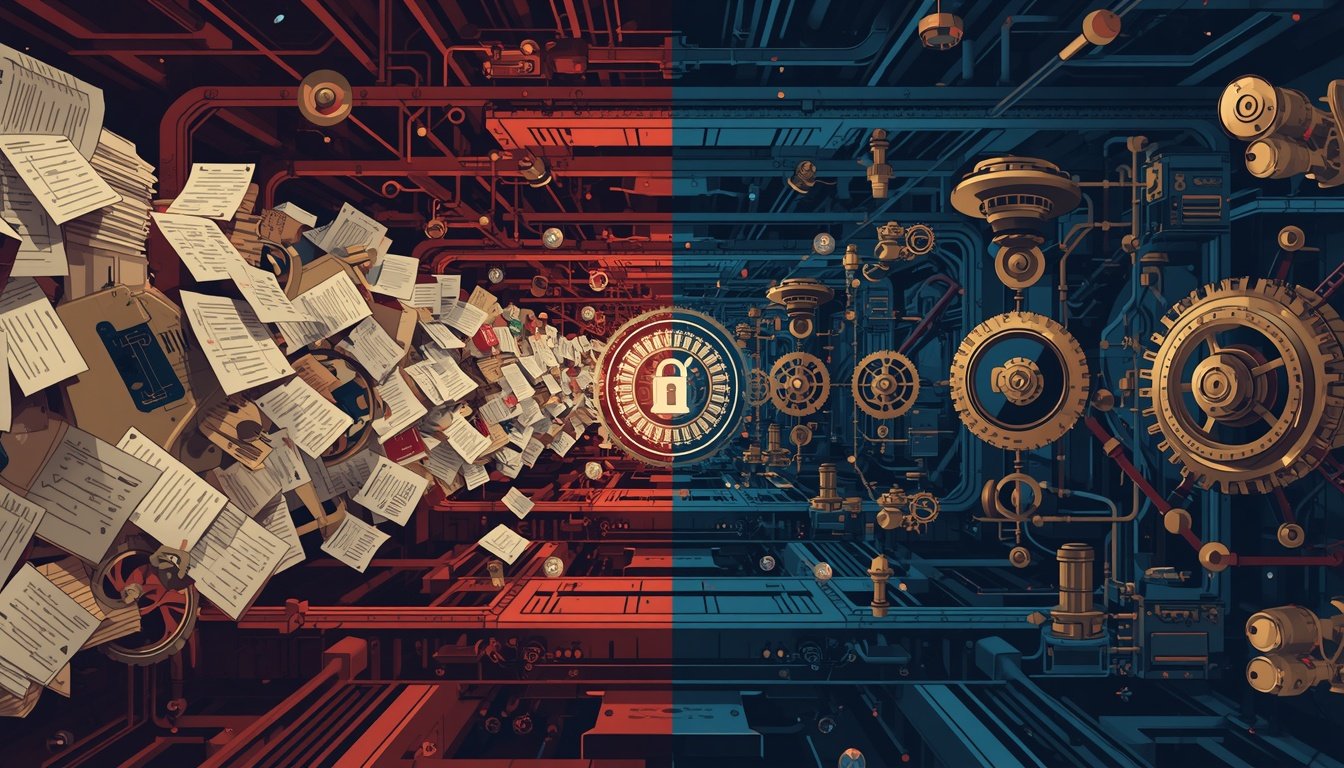
Intelligent Process Automation: How AI Is Redesigning Business Workflows
Businesses are under increasing pressure to do more with fewer resources. Customers expect faster responses, employees want simpler workflows, and organizations need to process growing volumes of data without continuously increasing operational costs. Traditional automation has helped businesses reduce repetitive work for years, but many modern workflows have become too complex for simple rule-based automation. They involve unstructured documents, emails, changing business conditions, human decisions, and information spread across multiple systems. This is where Intelligent Process Automation is becoming increasingly important.
Intelligent Process Automation combines synthetic intelligence with automation technologies to help organizations handle workflows that require greater than predefined rules. Instead of in reality following a set collection of instructions, wise automation can interpret data, perceive patterns, make hints, process unstructured facts, and help decisions within commercial enterprise workflows.
The difference is huge. Traditional automation may circulate information from one device to another when a selected situation is met. Intelligent Process Automation can probably understand an electronic mail, extract relevant facts from it, decide what action is needed, retrieve statistics from every other machine, and direction the venture to the suitable worker or utility.
This doesn’t mean companies are letting AI make all the choices. In big companies the better way is to use AI and automation together with people watching over things. AI can take on tasks that need a lot of information while people take care of decisions that need thinking, approval or responsibility.
As organizations continue integrating AI into their technology environments, Intelligent Process Automation is becoming a practical way to connect AI capabilities with everyday business operations.
What Is Intelligent Process Automation?
Intelligent Process Automation is the use of artificial intelligence, automation, data processing, and workflow technologies to improve and automate business processes.
Traditional process automation generally relies on predefined rules. If a certain condition occurs, the system performs a specific action.
Intelligent automation adds AI capabilities to workflows so systems can work with more complex information and situations.
For example, a traditional workflow might process an invoice when the invoice follows a predefined digital format. An intelligent process could analyze an invoice received as a PDF, identify the supplier, extract the amount, compare it against purchase information, identify potential discrepancies, and route the invoice for approval.
The technologies involved can vary depending on the workflow.
| Technology | Role in Intelligent Process Automation |
|---|---|
| Artificial intelligence | Understands and analyzes information |
| Machine learning | Identifies patterns and improves predictions |
| Generative AI | Produces and summarizes content |
| Natural language processing | Understands text and language |
| OCR | Converts documents into machine-readable information |
| Workflow automation | Coordinates business tasks |
| APIs | Connects applications and systems |
| Business rules | Controls predefined decisions |
| Analytics | Measures process performance |
| Human-in-the-loop systems | Provides human review when required |
The objective is not simply to automate more tasks. The objective is to create business processes that can respond more intelligently to changing information.
Why Intelligent Process Automation Is Becoming Important
Many organizations already use automation but traditional automation can struggle when workflows involve information.
Business processes frequently contain emails, contracts, invoices, customer messages, reports, PDFs, support tickets, and other documents that do not always follow the same format.
A rule-based system may have difficulty understanding these inputs.
AI can help interpret this information and convert it into structured actions.
For example, a customer may send an email explaining a complicated service problem. Instead of requiring an employee to manually read the message, identify the issue, search for customer information, determine its priority, and create a support ticket, an intelligent workflow can assist with several of these steps.
The system could identify the customer’s account, classify the request, summarize the issue, check relevant information, and route the ticket.
The employee can then review the result instead of starting the process from scratch.
This combination of AI and automation can improve productivity without necessarily removing humans from the workflow.

Intelligent Process Automation vs Traditional Automation
Understanding the difference, between automation and Intelligent Process Automation is important.
Traditional automation works best when processes are predictable and rules are clearly defined.
Intelligent automation becomes more useful when processes involve inputs, unstructured information or decisions that require contextual analysis.
| Traditional Automation | Intelligent Process Automation |
|---|---|
| Rule-based | AI-assisted |
| Works with structured inputs | Can process structured and unstructured data |
| Fixed workflows | More adaptive workflows |
| Limited interpretation | Can interpret information |
| Predefined conditions | Can use contextual information |
| Best for repetitive tasks | Suitable for complex information-heavy processes |
| Limited decision support | Can provide recommendations |
| Often deterministic | Can involve probabilistic AI outputs |
This does not mean intelligent automation replaces traditional automation.
In practice, businesses can combine both.
A workflow might use traditional rules for predictable steps and AI for tasks involving language, classification, prediction, or document interpretation.
How Intelligent Process Automation Works
An intelligent automation workflow generally combines several stages.
Capture → Understand → Decide → Automate → Validate → Improve
The first stage captures information from documents, emails, applications, databases, forms, or other sources.
The AI layer then analyzes the information and identifies what it means. The system can apply business rules, retrieve relevant data, and determine the next step.
Automation tools then execute predefined actions, such as updating an application, creating a task, sending a notification, or routing information to an employee.
Where necessary, a human can review the AI-generated result. Finally, organizations can measure workflow performance and improve the process over time.
This creates a more flexible approach than simply automating individual repetitive tasks.
Where Businesses Can Use Intelligent Process Automation
Intelligent Process Automation can be applied across many departments because most organizations have processes involving documents, communication, data, and repetitive decisions.
| Business Function | Potential Use |
|---|---|
| Finance | Invoice processing and expense management |
| Customer service | Ticket classification and response assistance |
| Human resources | Resume and employee-document processing |
| Sales | Lead qualification and CRM updates |
| Marketing | Content classification and campaign workflows |
| Procurement | Supplier document processing |
| IT | Ticket analysis and incident routing |
| Legal | Contract analysis and document workflows |
| Operations | Exception detection and process coordination |
| Insurance | Claims document processing |
The best use cases usually involve high volumes of repetitive information processing where AI can reduce manual effort.
Intelligent Process Automation in Finance
Finance departments handle large volumes of invoices, expense reports, payment requests, financial documents, and approval workflows.
Traditional automation can process structured financial information, but intelligent automation can add capabilities for understanding documents and identifying exceptions.
An intelligent invoice workflow could extract information from a document, compare it against purchase records, identify unusual differences, and route the invoice for approval.
This can reduce manual data entry and allow finance employees to focus on exceptions and higher-value financial activities.
However, financial workflows also require strong controls. AI-generated decisions should be validated according to the organization’s risk requirements.
Intelligent Process Automation in Customer Service
Customer service is another strong application area.
Support teams receive emails, chat messages, forms, and calls containing different types of customer requests.
AI can classify incoming requests, summarize conversations, identify customer intent, retrieve relevant knowledge, and recommend next steps.
Automation can then route the request to the correct department or update the relevant system.
For example:
Customer message → AI classification → Customer information retrieval → Priority assessment → Ticket creation → Human response
This can reduce the amount of repetitive administrative work performed by support teams.
Intelligent Process Automation in Human Resources
A smart workflow could pull data from employee documents sort requests by type find the company policy and send the request to an HR expert.
Intelligent automation can help organize and process this information.
A workflow could extract information from employee documents, classify requests, identify the relevant policy, and route the request to an HR specialist.
However, HR is a sensitive area. AI should not automatically make high-impact employment decisions without appropriate oversight, controls, and evaluation.
The role of intelligent automation should often be to assist HR professionals rather than remove accountability from the process.
Intelligent Process Automation and Document Processing
Processes with lots of documents are perfect for automation. AI can. Understand documents in ways old automation tools can’t.
New AI systems can scan papers find details summarize what they say sort documents, into types and compare data from different files.
| Document | Potential Automation |
|---|---|
| Invoice | Extract and validate financial information |
| Contract | Identify clauses and summarize terms |
| Resume | Extract candidate information |
| Insurance claim | Classify and organize claim documents |
| Purchase order | Compare order information |
| Support document | Identify issue and category |
| Compliance report | Extract relevant information |
The goal is to transform unstructured information into usable business data.
The Role of Generative AI
Generative AI is expanding what intelligent automation can accomplish.
Traditional automation generally performs predefined actions.
Generative AI can work with language and generate summaries, explanations, drafts, classifications, and responses.
This allows businesses to automate parts of workflows that previously required human interpretation.
For example, an automated customer-service workflow can use generative AI to summarize a customer’s issue before sending the case to an employee.
Similarly, a sales workflow could summarize account activity before a salesperson reviews the opportunity.
The important consideration is that generated content should be evaluated according to the risk of the workflow.
Low-risk tasks may require basic validation, while sensitive processes may require human approval.

Human-in-the-Loop Automation
One of the most important concepts in Intelligent Process Automation is human-in-the-loop design.
Businesses do not have to choose between completely manual processes and fully autonomous AI.
Instead, AI can handle tasks that are suitable for automation while humans manage exceptions and high-impact decisions.
| AI Handles | Human Handles |
|---|---|
| Data extraction | Final approval |
| Document classification | Complex exceptions |
| Summarization | Sensitive decisions |
| Information retrieval | Strategic judgment |
| Routine recommendations | Escalated cases |
| Workflow routing | Accountability |
This approach can provide the efficiency benefits of automation while maintaining human oversight where it matters most.
Benefits of Intelligent Process Automation
Businesses adopt intelligent automation for different reasons, but several benefits appear across industries.
- Higher Productivity: Employees spend less time on repetitive administrative work.
- Faster Processes: Automated workflows can operate continuously without waiting for manual processing.
- Better Data Processing: AI can process large volumes of documents and communications more quickly.
- Improved Consistency: Standardized workflows can reduce variation in repetitive processes.
- Better Employee Experience: Employees can spend more time on complex and valuable work instead of routine administration.
- Scalable Operations: Businesses can handle increasing volumes without increasing manual effort at the same rate.
These benefits depend on appropriate implementation. Poorly designed automation can simply move inefficiency from one part of a workflow to another.
Challenges of Intelligent Process Automation
Despite its potential, intelligent automation introduces several challenges.
One of the biggest is data quality.
AI systems rely on the information they receive. If the underlying data is incomplete, inconsistent, or outdated, the workflow may produce poor results.
Another challenge is integration.
Businesses often operate multiple applications, and intelligent workflows may need to exchange information between CRM, ERP, databases, document systems, communication platforms, and other applications.
Security is another major consideration.
AI-enabled workflows may have access to sensitive business information. Organizations need to ensure that systems only access the information required for their tasks.
Cost can also become a factor. AI processing, infrastructure, integrations, monitoring, and maintenance all contribute to the total cost of intelligent automation.
Key Challenges to Consider
| Challenge | Why It Matters |
|---|---|
| Data quality | Poor data can reduce AI accuracy |
| Integration | Disconnected systems make automation difficult |
| Security | AI workflows may access sensitive data |
| Governance | Businesses need clear rules for AI use |
| Accuracy | AI outputs may require validation |
| Cost | AI processing can increase operating expenses |
| Adoption | Employees need to trust and use the system |
| Monitoring | Production workflows require continuous oversight |
How Businesses Can Implement Intelligent Process Automation
Businesses should avoid starting with technology alone.
The first step should be identifying a process that creates measurable operational value.
Organizations should document the current workflow and identify where employees spend the most time.
Next, businesses can determine which parts of the process are suitable for traditional automation and which require AI.
For example, a workflow may use AI to classify an email but traditional automation to update the CRM.
This combination can often be more reliable than attempting to make the entire workflow AI-driven.
A practical implementation process can follow this structure:
Identify → Map → Prioritize → Pilot → Validate → Integrate → Monitor → Scale
Starting with a focused workflow also makes it easier to measure results.
Measuring Intelligent Process Automation ROI
Businesses need clear metrics to determine whether intelligent automation is producing value.
| Metric | What It Measures |
|---|---|
| Processing time | Workflow speed |
| Cost per transaction | Operational efficiency |
| Manual hours | Employee time saved |
| Error rate | Quality |
| Automation rate | Percentage of work automated |
| Exception rate | Work requiring human intervention |
| Customer response time | Service improvement |
| Employee productivity | Workforce impact |
| AI operating cost | Technology efficiency |
The right metrics depend on the process.
For a finance workflow, cost per invoice and processing time may be important. For customer service, response time and resolution rate may matter more.
The objective should be to connect automation metrics with actual business outcomes.
Intelligent Process Automation and Business Transformation
Intelligent Process Automation should not be viewed only as a productivity tool.
When applied across multiple processes, it can influence how organizations operate.
Instead of employees manually moving information between applications, intelligent workflows can connect systems and coordinate tasks.
Instead of waiting for employees to interpret every document, AI can process information and surface important exceptions.
Instead of treating every customer request identically, AI-enabled workflows can use context to determine appropriate next steps.
This can create a more responsive operating model.
However, successful transformation requires process redesign.
Automating a poorly designed process does not automatically make the process better.
Businesses should first identify unnecessary steps, duplicated work, bottlenecks, and manual handoffs before introducing intelligent automation.

The Future of Intelligent Process Automation
The future of Intelligent Process Automation is likely to involve increasingly connected AI systems.
Businesses are moving toward workflows in which AI can interpret information, retrieve context, interact with applications, and coordinate multiple steps.
AI agents may become part of these workflows, particularly where tasks require multiple decisions and interactions with business tools.
At the same time, traditional automation will remain important for predictable tasks.
The resulting architecture is likely to be a combination of:
AI + Automation + APIs + Business Rules + Data + Human Oversight
This hybrid approach can allow organizations to automate repetitive work while retaining control over important decisions.
The most successful businesses will likely focus less on automating everything and more on designing intelligent workflows where AI is used specifically where it provides an advantage.
Conclusion
Intelligent Process Automation is changing how businesses approach workflow automation.
Traditional automation remains quite beneficial for predictable, rule-primarily based approaches, but contemporary commercial enterprise workflows increasingly more involve unstructured statistics, changing conditions, and complicated choices. AI can help corporations address those challenges by way of adding abilties consisting of document know-how, language processing, type, prediction, summarization, and intelligent selection guide.
The biggest opportunity is not simply replacing manual tasks with AI.
It is redesigning workflows so that people, AI, automation, data, and business applications work together more efficiently.
Businesses can start by identifying information‑heavy processes and determining where AI can provide measurable value. From finance and customer service, to HR, IT, procurement and operations Intelligent Process Automation can help organizations reduce work and improve the speed at which information moves through the business.
At the same time, security, governance, data quality, integration, cost, and human oversight must remain central to implementation.
As AI becomes extra integrated into organization generation, Intelligent Process Automation is probable to turn out to be an essential a part of how corporations redecorate workflows for a quicker, more connected, and extra clever operating surroundings.
FAQs
1. What is Intelligent Process Automation?
Intelligent Process Automation combines AI, workflow automation, data processing, and business rules to automate and improve complex business processes.
2. How is Intelligent Process Automation different from traditional automation?
Traditional automation generally follows predefined rules, while Intelligent Process Automation can use AI to interpret information, process unstructured data, identify patterns, and support more complex workflows.
3. What businesses can benefit from Intelligent Process Automation?
Almost any organization with repetitive, information-heavy processes can potentially benefit. Common areas include finance, customer service, HR, IT, procurement, insurance, sales, and operations.
4. Does Intelligent Process Automation replace employees?
Not necessarily. Many organizations use intelligent automation to reduce repetitive work and allow employees to focus on decisions, exceptions, customer interactions, and strategic activities.
5. What technologies are used in Intelligent Process Automation?
Technologies can include artificial intelligence, machine learning, generative AI, natural language processing, OCR, APIs, workflow automation, analytics, and business-rule engines.
6. How does AI improve business workflow automation?
AI allows automation systems to work with information that may be difficult to handle using fixed rules, including documents, emails, conversations, and other unstructured data.
7. What are the biggest challenges of Intelligent Process Automation?
Common challenges include data quality, system integration, AI accuracy, security, governance, operating costs, employee adoption, and ongoing monitoring.
8. How can businesses measure Intelligent Process Automation?
Businesses can track processing time, manual hours saved, cost per transaction, error rates, automation rates, exception rates, customer response times, and overall business outcomes.

Jimmy Simmons
Jimmy Simmons contributes insights and perspectives across artificial intelligence, emerging technology, automation, enterprise AI and digital innovation.